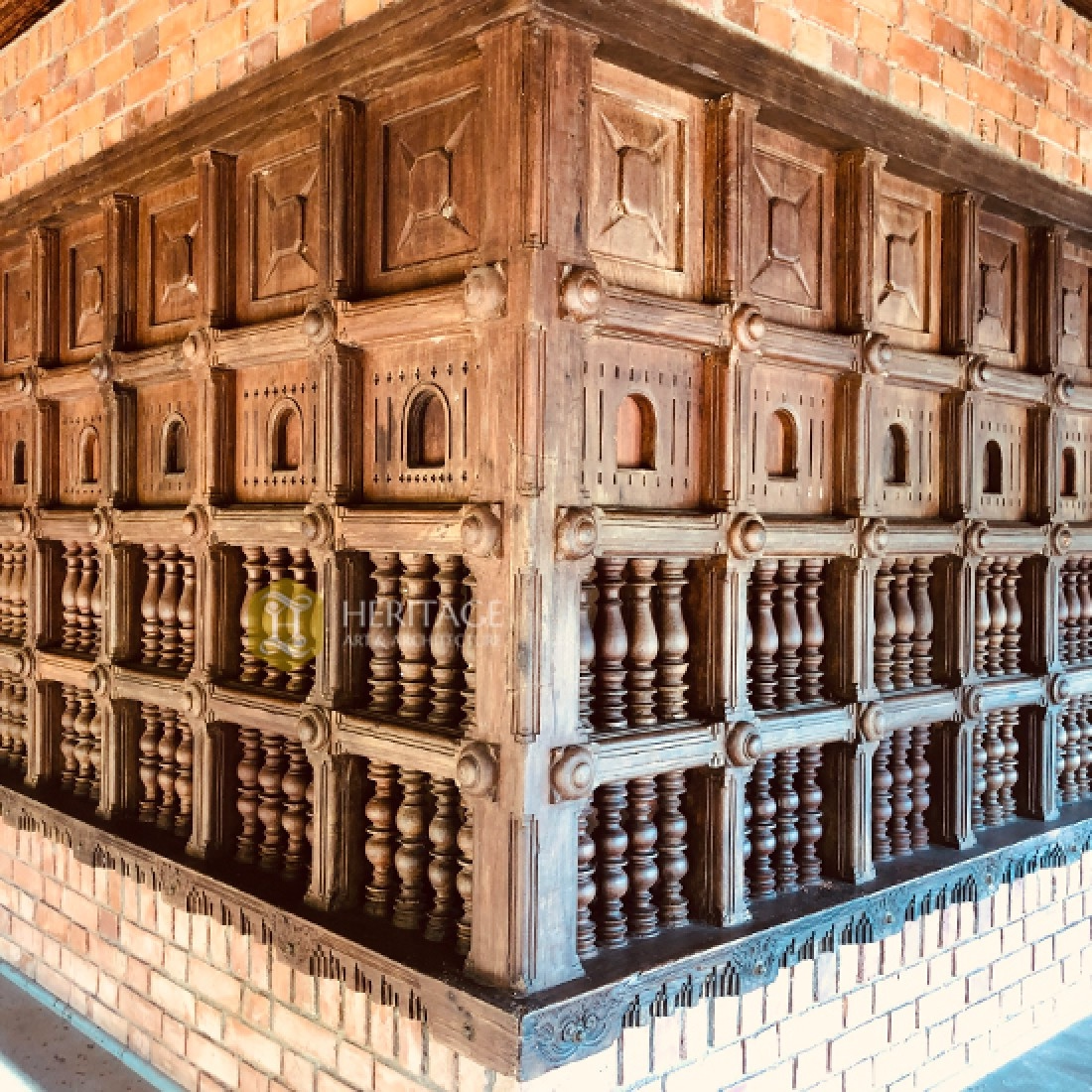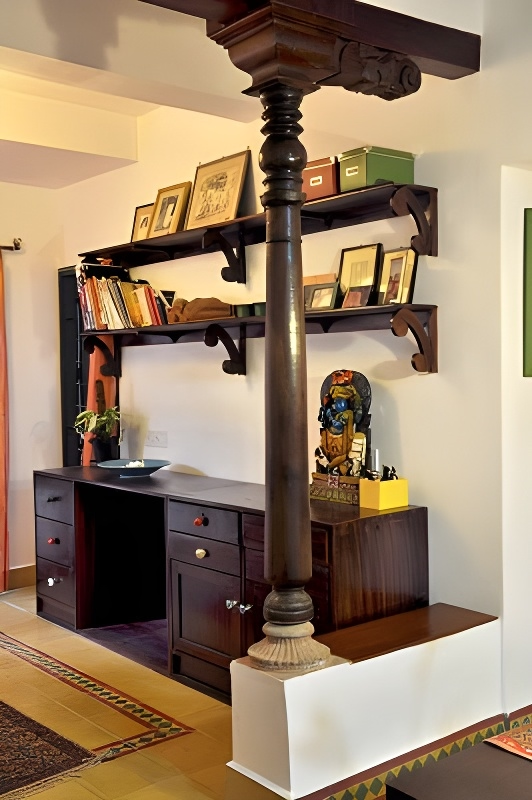
Aśritasthāna stands not merely as a structural element — but as a silent guardian of heritage, a companion to books, memories, and prayers. Its rich dark wood, compact form, and ornamental base evoke the grace of Kerala’s agraharams and Chettinad homes, now reimagined for contemporary interiors. Ideal for compact corners, pooja nooks, or reading alcoves, this handcrafted wooden pillar adds poetic presence without overwhelming space. It blends seamlessly with desks, consoles, or transitional partitions — embodying quiet sophistication rooted in tradition. Finished with deep polish, fine joinery, and a sculptural finesse, it invites a story into every interior: of stillness, shelter, and sculptural elegance.
Each component reflects a story of devotion, culture, and skilled hands
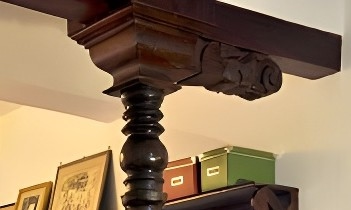
At the very summit of Aśritasthāna sits the Śirasthala, a squared crown that meets the ceiling or beam with quiet dignity. “Śiras” means head, “Sthala” means place—together, they evoke the idea of a sacred meeting point between earth and sky. This block is not just a structural necessity; it is a visual anchor, offering a sense of completion and balance. Its crisp lines and subtle overhang recall the capitals of ancient temple pillars, where the divine and the earthly are joined. The Crown Platform is where the journey of the pillar begins, setting the tone for everything that follows below.
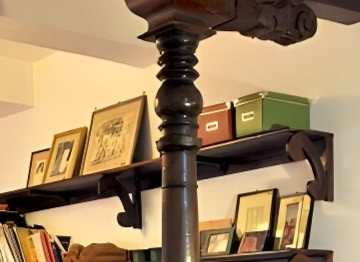
Just below the crown, the Kanthabandha encircles the pillar like a ceremonial clasp. “Kantha” means neck, “Bandha” means binding—this ring is both a decorative accent and a symbolic transition. Its form is inspired by the elegant neck rings seen on South Indian bronze deities and temple bells, signifying refinement and ritual. The Neck Brace marks the shift from the squared capital to the flowing shaft, adding a touch of grace and a sense of anticipation, as if the pillar is pausing to breathe before continuing its descent.

The heart of Aśritasthāna is the Taralavṛtta, a smooth, uninterrupted column that stands as a metaphor for poised presence. “Tarala” means fluid or elegant, “Vṛtta” means circular—together, they describe a form that is both strong and serene. The Grace Column is meticulously turned on a lathe, its surface polished to a deep, luminous sheen. It is here that the craftsman’s skill is most evident: every curve, every grain, every subtle taper is a testament to patience and mastery. The shaft is not just a support; it is a silent witness, holding space for all that unfolds around it.

Near the base, the Mañjīra Pāṭa encircles the pillar like a dancer’s anklet. “Mañjīra” refers to the tiny metallic bells worn by temple dancers, “Pāṭa” means band. This ring—whether carved from wood or inlaid with brass—adds a gentle rhythm to the pillar’s form, marking the transition from the shaft to the base. The Anklet Band is both ornament and punctuation, a subtle reminder of movement and celebration. It brings a sense of festivity and grace, echoing the music and rituals of temple life.
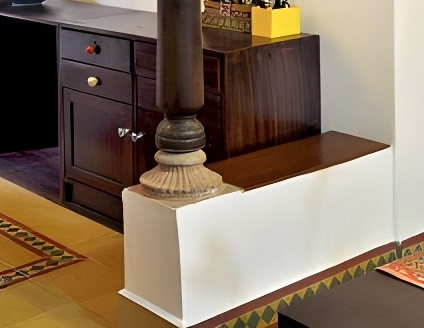
At the foundation lies the Pāda Maṇḍala, a circular base that grounds the entire pillar. “Pāda” means foot, “Maṇḍala” means circle or sacred ring. This Foot Halo is shaped to gently flare outward, reminiscent of a lotus blooming from the earth. It is both a functional support and a symbolic root, anchoring the pillar in place while suggesting a connection to the sacred geometry of Indian art. The base is where the journey ends, rooting Aśritasthāna in the present moment and in the heart of your home.
From sleek, modern designs that exude contemporary elegance to timeless classics that evoke warmth and nostalgia, our curated selection has something for every taste and lifestyle. Each piece is crafted with precision and care, ensuring both quality and durability.