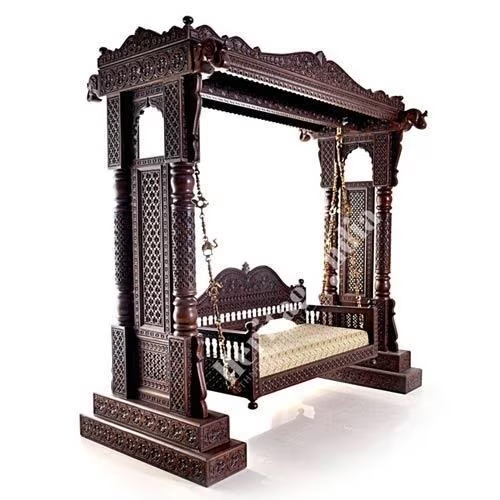
In India’s timeless tradition, the mandapa is more than architecture—it is a stage where life’s most sacred and celebrated moments unfold. It is under a mandapa that vows are exchanged, blessings are sought, and rituals are performed. Its carved pillars and ornamented canopy frame not just ceremonies, but the memories that become family heritage. These pavilions are built not merely to shelter, but to honour; not merely to enclose, but to elevate every act within them into an occasion of significance. In the same spirit, the swing—jhūlā—has for centuries been a treasured element in Indian homes, a symbol of leisure softened by reverence. It is where elders gather for quiet conversations that stretch into the evening, where children sway in delight, and where solitary moments are spent in deep reflection. The swing moves gently, yet with purpose—much like life itself—inviting a balance between stillness and motion, presence and memory. Mandapa-Jhūlāḥ is the meeting of these two legacies: the grandeur of the ceremonial pavilion and the intimacy of the domestic swing. It stands as though it were a miniature palace mandapa, complete in proportion and spirit, bringing the dignity of temple architecture into the heart of a living space. Its sheer presence transforms its surroundings—whether placed in a sunlit verandah, a garden courtyard, or an indoor atrium—into a royal courtyard alive with culture and grace. Every inch of Mandapa-Jhūlāḥ is a page in a carved manuscript. The intricate jālaka (lattice panels) speak of palace screens where queens once watched court processions in privacy. The scrolling floral vines and lotus rosettes mirror the ornamentation of ancient temple gateways, each curve carrying centuries of symbolic artistry. The slender, tapering stambhas (pillars) stand with poised elegance, their surfaces alive with geometric precision and botanical motifs, as if holding in their grain the blessings of the artisans who shaped them. Beneath its towering śirṣa (crown canopy), the swing seat hangs with quiet dignity. The svarṇa-śṛṅkhalāḥ (golden chains) glisten like divya-latās—celestial vines descending from unseen heavens—linking earth and sky with every gentle arc. The backrest curves in soft arches, evoking the scalloped frames of haveli windows and temple sanctums, its symmetry and rhythm offering both visual delight and a sense of calm repose. This is not merely a swing—it is a private mandapa, a sanctum of leisure. Here, the pace of life slows to match the rhythm of the sway. The air feels touched by history, as though each breath carries a trace of temple incense and courtyard jasmine. In its embrace, time becomes fluid, memory and presence merge, and every moment—whether spent in conversation, contemplation, or simply in stillness—is elevated into a cherished ritual.
Each component reflects a story of devotion, culture, and skilled hands
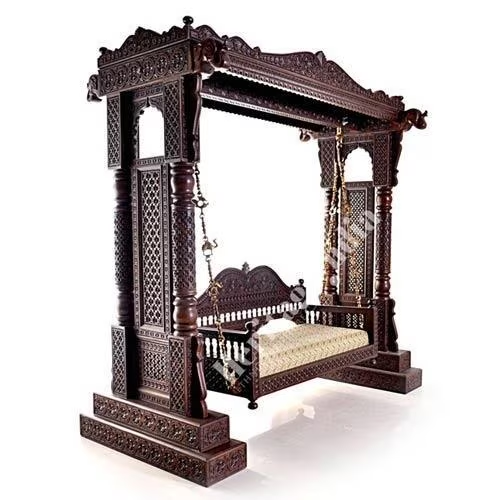
The āsana-vedī—the seat platform—is a broad, inviting expanse designed for repose. Its perimeter is defined by a rhythmic row of veṇu-patrikāḥ (turned balusters), echoing the railings of royal balconies and temple prākāras. The flat expanse offers comfort for both solitary reflection and convivial gatherings, while its proportions balance the vertical drama of the pillars with grounded horizontality. Here, one can sit in conversation, recline with a book, or simply sway into thought.
From sleek, modern designs that exude contemporary elegance to timeless classics that evoke warmth and nostalgia, our curated selection has something for every taste and lifestyle. Each piece is crafted with precision and care, ensuring both quality and durability.